
Table of Contents
- Medieval Architecture of Baku Until 1860
- Oil Boom Architecture of Baku: the late XIX and early XX century
- Soviet Architecture in Baku: XX Century
- Contemporary Architecture in Baku: XXI Century
Overview of Architecture in Baku
Baku’s built environment overwhelmingly owes to oil. Without oil, Baku would be merely a small town in a semi-desert arid climate. Oil was decisive in Baku’s development as a city. However, individuals, culture, politics, and ideologies, which were independent of oil influence, also had an impact. Before the development of oil, Baku was a truly oriental town. It had spatial structures based on the Muslim concept of urban planning. The continuity of oriental identity was broken by the Oil Barons of the late XIX and the early XX century. Oil riches opened Baku’s doors to European ideas of urban planning and architecture of eclecticism. Later the Bolshevik Revolution of 1917 had shaken up the existing economic and socio-political system. This led to Baku’s expansion and growth driven by the socialist ideology for the rest of the XX century. All these created an exceptional synthesis best described by Pirouz Khanlou as “Baku is perhaps the only true Eurasian city on the world map, not only geographically but in its unique ability to synthesize both European and Asian architectural styles…”
Baku has undergone a transformation as a city. It presents a unique mixture of cultures, traditions, and contradictions. With this context, we present you a guide to Baku Architecture. This will help you to prioritize neighbourhoods and attractions of your primary interests. You will know what to do and see upon your visit from the perspective of Architecture.
Medieval Architecture of Baku Until 1860
Socio-Political Environment
The Shahs of Shirvan (Shirvan is a historic name of the north-eastern part of Azerbaijan) ruled Baku. This occurred after Baku became a domain in the Islamic Caliphate throughout most of the medieval times. Originally an Arabic dynasty later became persianized under the influence of much dominant culture. In 1501, Shah Ismail I of the Safavid Empire invaded Baku. His invasion brought the reign of Shirvanshahs to an end. After the fall of the Safavid Empire, chaos ensued and a power struggle began. This struggle made Baku a Khanate of an autonomous principality. It was under Persian suzerainty. Lasted for half of a century Baku Khanate ceased to exist with the Imperial Russia invasion in 1806.
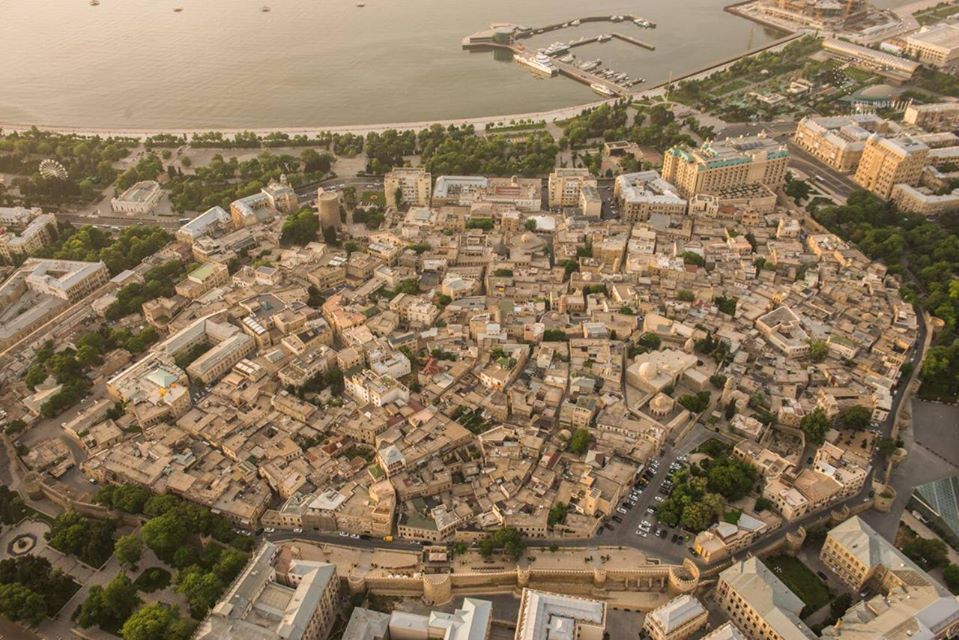
Until 1860, Baku consisted of what we now call Ichari Shahar. This area is literally the Inner City, a name given later. It is also known as the Old Town. It had a population of about 7400. Almost all of them were Muslims.
Development and Specifics of the Architecture
The architecture that developed in Shirvan has been nominally termed as Shirvan-Absheron Architecture School. Oriental and Islamic traditions of architecture from Persia had a large influence on the architecture in Baku. Nonetheless, Shirvan-Absheron Architecture School produced a brand specific to this region.
The built environment, design and spatial structures were organized in accordance with the Muslim concept of urban planning. In medieval times, Baku consisted of Mahallas, traditional Muslim neighbourhoods. No matter how small they were but every Mahalla would have its own mosque, bathhouse, and market square. The streets were narrow, curved and labyrinthine. Most houses were low, one story and they all had flat roofs which were used mostly in summer times.
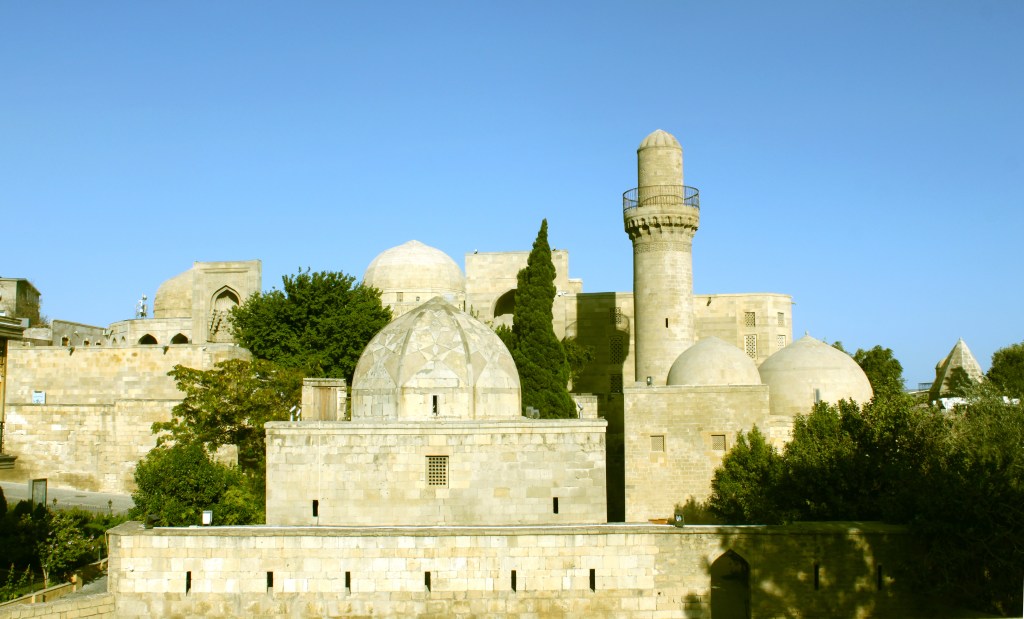
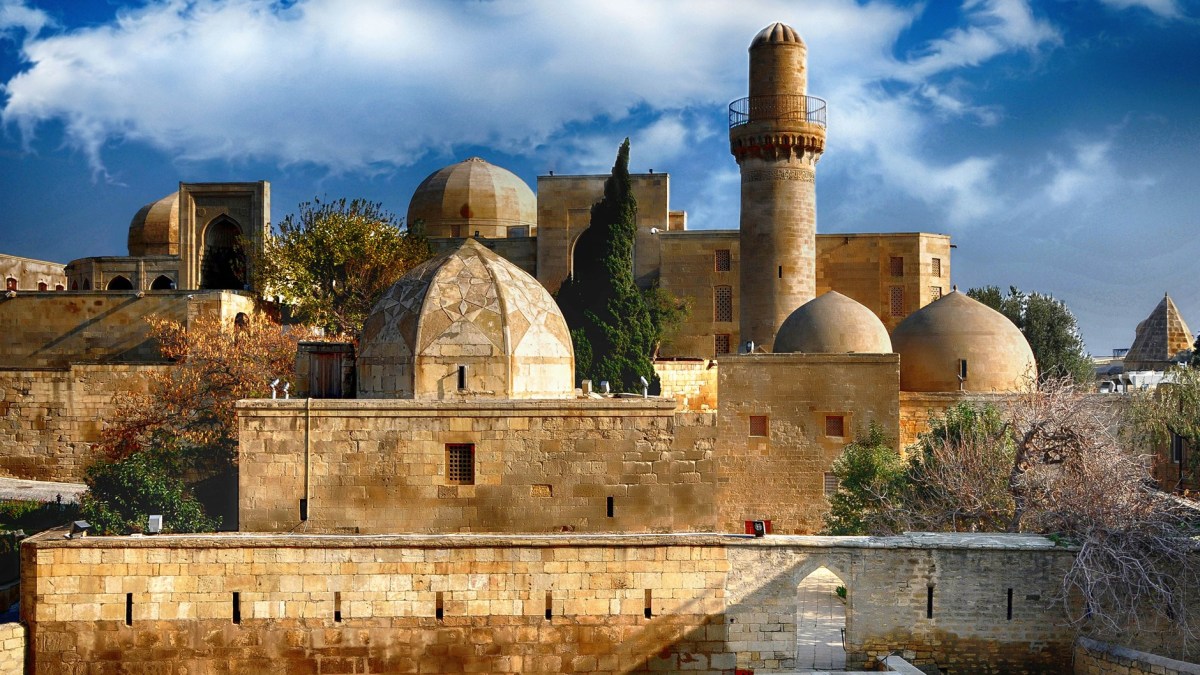
The Shirvanshahs moved the capital to Baku two times in medieval times: the 11th and the 15th centuries. Both occasions brought enormous changes to Baku. In the Eleventh Century, Manuchehr III ordered the city to be fortified. He commanded the construction of fortress walls on all sides of the city. Those fortress walls survived to our times. In the fifteenth century, three Shirvanshahs resided in Baku permanently as their capital. During this time city underwent huge urbanization as well as the completion of the Ensemble of the Shirvanshahs Palace. This has left a legacy for Baku’s Ichari Shahar to depend on until even today. Thus the architectural details and structure of Ichari Shahar came down to us from the 15th century.
Today, all the rehabilitation works have been carried out with care. Restoration efforts were also done meticulously. These efforts aim to preserve the medieval vibes and atmosphere in Ichari Shahar. This offers a unique opportunity to walk in an urban setting of the 15th century in the 21st century.
Neighbourhoods to Explore
Unmistakable, the must-visit neighbourhood to explore the medieval attractions of Baku is Ichari Shahar, aka the Old Town. Icheri Shahar is easily recognizable with high and grey Fortress Walls surrounding it. There are five entry points on the Fortress Walls and they are accessible all day around. To the south of Icheri Shahar stands the grand Baku Promenade along the Caspian Sea.
One can observe zones in Ichari Shahar, although there is no such formal policy. There are commercially busy streets such as Boyuk Gala, Kichik Gala and Asef Zeynalli streets. The quarter is where most of the historic attractions are located, such as the surroundings of the Shirvanshahs Palace and the Maiden Tower. There are also residential areas where mostly local people live.
It is still a residential area where some three thousand people live. As the most historic area, it attracts many Bakuvians. They enjoy their Sunday breakfast or weekday dinner with a view to the architectural delights of Ichari Shahar.
JOIN US ON
Baku Old Town Private Walking Tour
Landmark Architectures
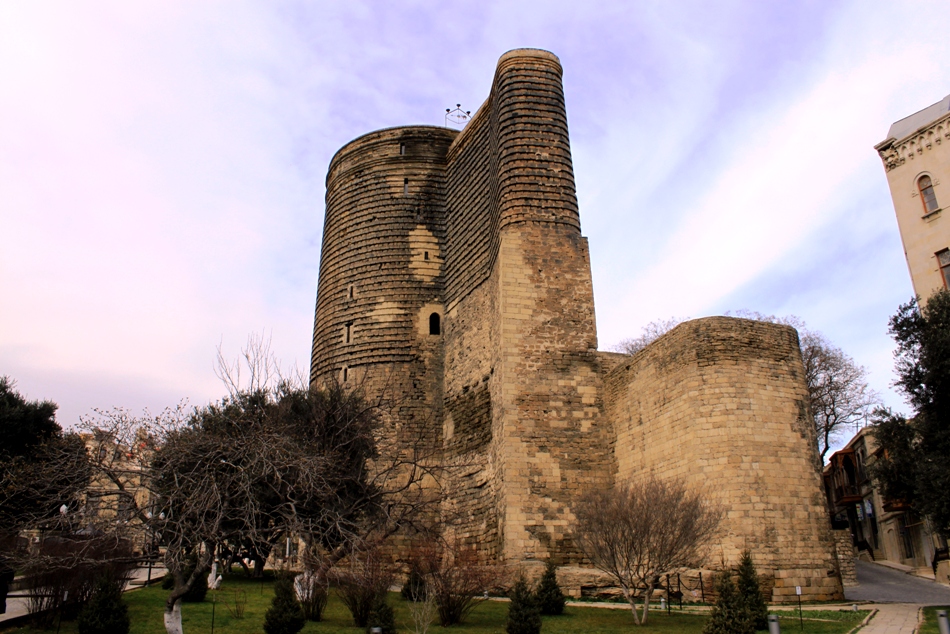
Landmark architectures of the XI century medieval period include the Fortress Walls. The XII century features the Maiden Tower. The XV century showcases the Shirvanshahs Palace and Muhammad Mosque, along with the reconstructed Bibi Heybat Mosque. All of them except for Bibi Heybat Mosque are UNESCO World Heritage Sites. See the map of the attractions below.
Oil Boom Architecture of Baku: the late XIX and early XX century
Socio-Political Environment
In its entirety, Baku had been part of Imperial Russia from 1806 to 1917. The Russian invasion cuts Baku’s ties with the oriental south. However, it was the devastating earthquake in 1859 in Shamakhi that changed everything.
In 1860 Baku became centre of Gubernia (an administrative division of Transcaucasia), hence the name Baku Gubernia. For the first time in ages, civilian engineers took a proper role to plan the city and its expansion. Additionally, the development of the oil industry led to a massive investment of capital. It also caused an influx of emigration to Baku.
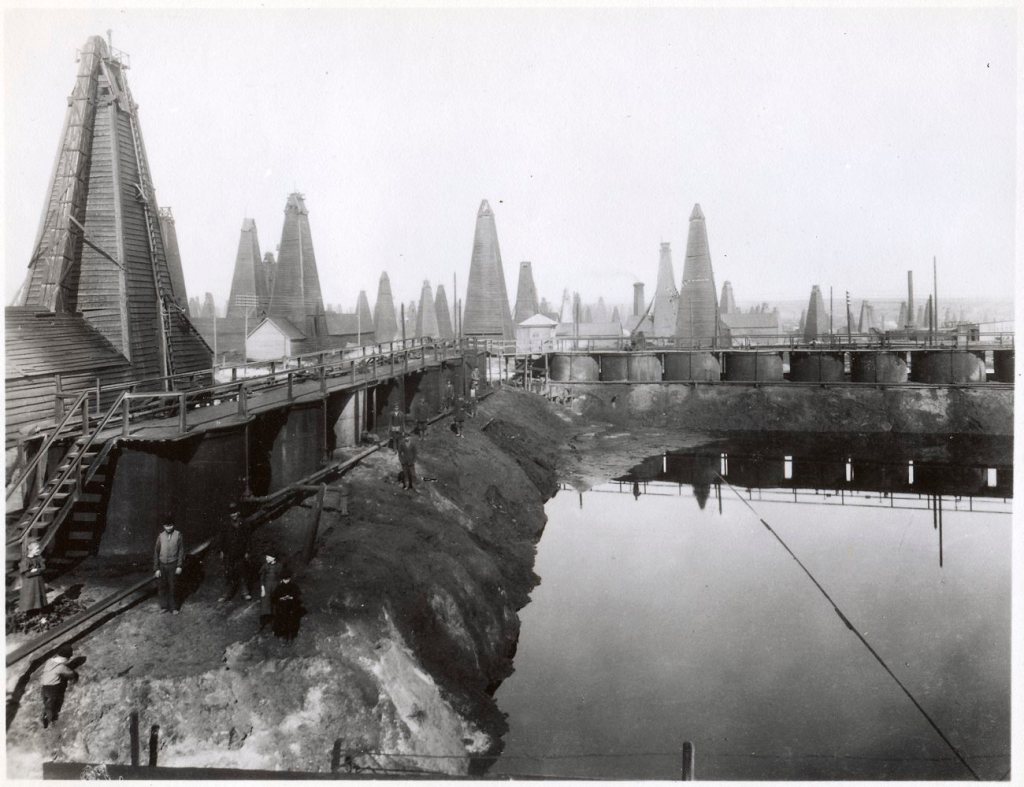
A small town now turned into a global industrial and modern centre. In 1901 Baku was one of the two largest oil producers in the world by surpassing the US oil production. Major industrialists of Europe, such as the Nobel Brothers and the Rothschild family, were leading actors in the oil industry. A few emerging local entrepreneurs also played significant roles.
Emigration also changed Baku’s human geography and made it a cosmopolitan city. In the 1850s Baku’s population was just about 7400 and the absolute majority of them were Muslim. In 1901 Baku’s official population was 150 000 and only one-third of them were Muslims. Alongside with Muslim Azerbaijanis, there were Russians, Jews, Armenians, Germans and Polish ethnicities.
During this time of period, Baku was transformed into a metropolitan city. It had the essence of European metropolises, or as they call it, Paris of the Caucasus. However, it retained an oriental spirit at its core.
Development and Specifics of the Architecture
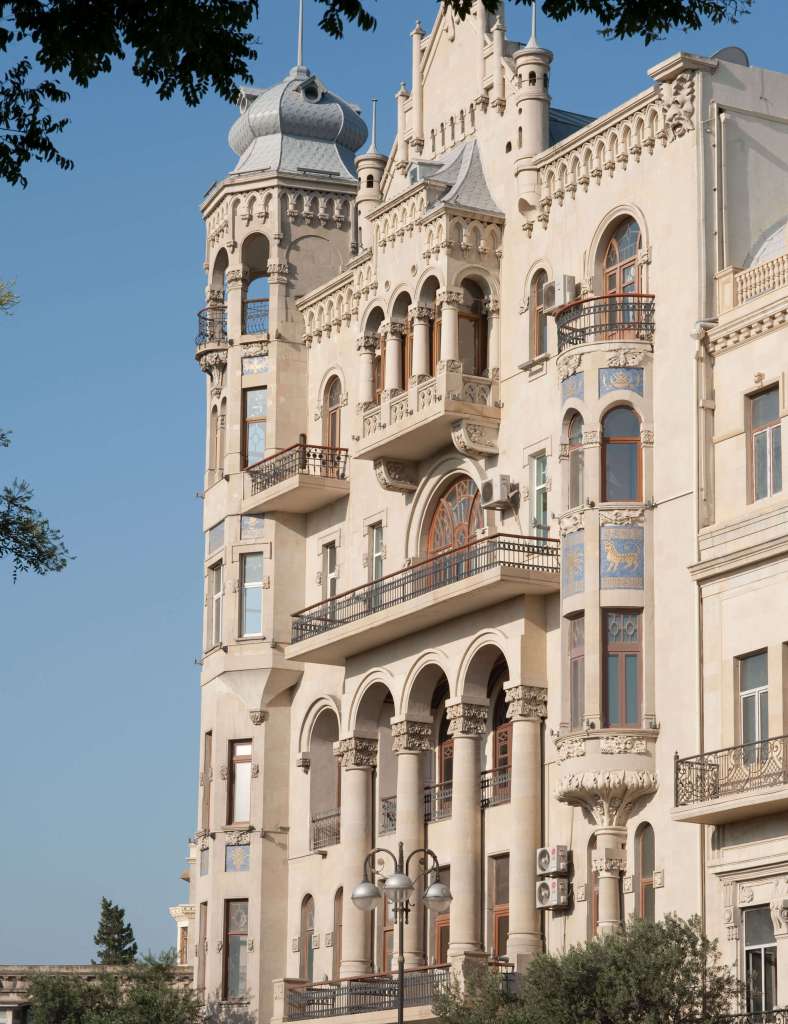
In this period, three factors facilitated the transformation of Baku’s Oil Boom Architecture. Firstly, a greater role was given to civilian engineers and architects. In particular, civil architects of Saint Petersburg Civil Engineering Institute were instrumental in importing European Architecture and Planning to Baku. The second was the role played by the Oil Barons, a new generation that emerged in Baku. They were not bonded with the traditional and customary lifestyle of Old Baku. And their oil riches enabled them to adopt new ideas and cultures and values of Europe. Thirdly, the evolving cosmopolitan environment contributed to plurality in society. Cultural diversity and mixing ethnic groups enriched artistic expression and creativity in Baku’s Oil Boom Architecture. All these played an equal role in giving Baku a new architectural identity.
The defining characteristic of Baku’s Oil Boom Architecture is eclecticism. Some scholars go further calling it Baku Architecture of Eclecticism. The above-mentioned three factors worked together to start a new architecture movement in Baku. However, they clashed regarding architecture principles. They also diverged in the personal tastes of the Oil Barons and their affiliation with particular cultural backgrounds. That clash could not be well-explained by anything but this popular saying that an Oil Baron summoning an architect and wishing “I want to have an entrance like in Taghiyev’s house, the dome like in Mukhtarov’s mansion, the porch like in Dadashov’s domicile, the decorations like in Mitrofanov’s residence, and something of my own.” Oil Barons lacked architectural knowledge. This put architects in a dilemma. They had to decide whether to follow principles of the built environment or fulfill the extravagant wishes of their clients. A solution would be a synthesis of clients’ desires and architects’ ability to showcase the creativity put in their works.
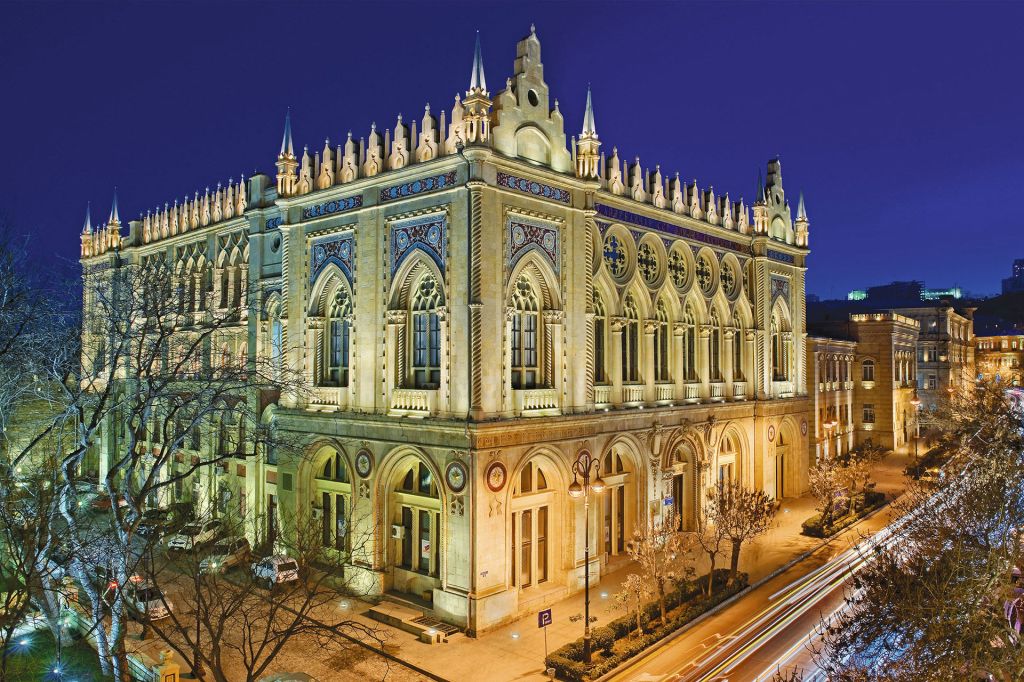
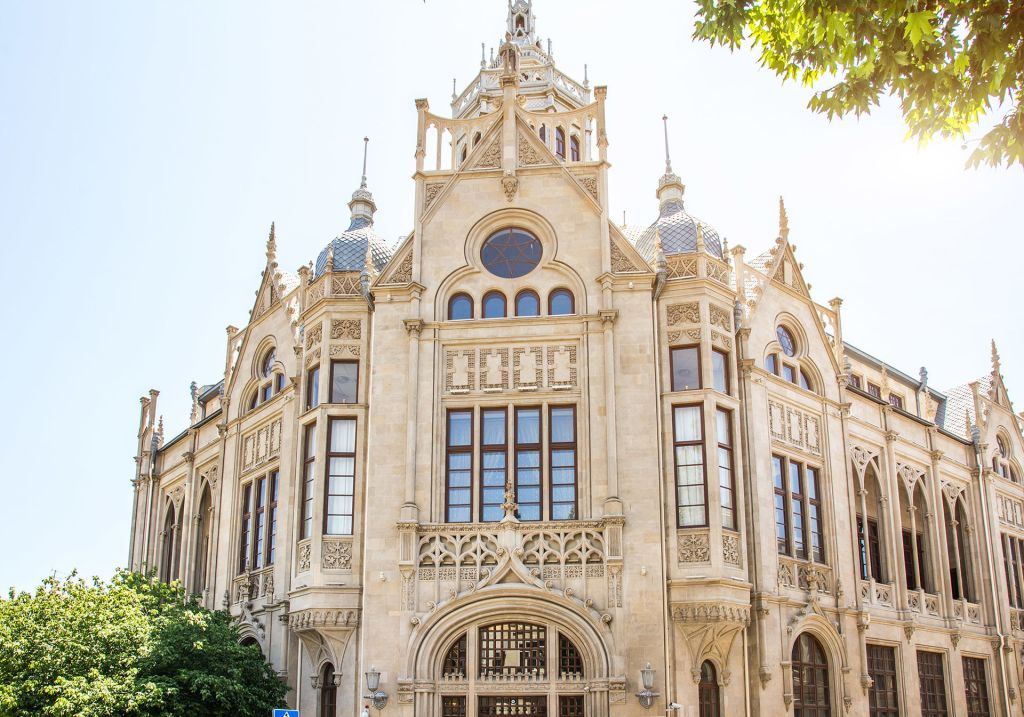
Baku Oil Boom Architecture was peculiar. Yet, it produced great architects who are well respected and honoured across the times. Among them were architects: Gasim bey Hajibababeyov, Zivar bey Ahmadbeyov, and Mammad Hasan Hajinski. Józef Gosławski, Józef Plośko, and Adolf Eichler also feature prominently. Others include Nikolay Von Der Nonne, Robert Marfeld, Nikolai Bayev, and Gavril Ter-Mikelov. Many more could be named. They contributed masterpieces to Baku’s architecture. These include Neo-Classical, German and Italian Renaissance Revival styles. They also include French Islamic Magreb, Vienna Secession, and Venetian Gothic Revival styles. All these gave rise to a metamorphosis of European and Oriental architecture in Baku.
Neighbourhoods to Explore
The best neighbourhood to explore Baku’s Oil Boom Architecture is Baku Downtown. When Ichari Shahar became a UNESCO World Heritage Site, Baku Downtown was included in the protected area. This was due to its proximity to Ichari Shahar. So any street in Baku downtown is an area to showcase the best examples of architecture.
In Baku Downtown locates the Nizami Street, the busiest street in Baku. It is a traffic-free street with retail brand shops, popular cafes and restaurants as well as theatres. Thus anyone finds anything to do to feel like a local in the beating heart of the city.
You can take a walk along Istiqlaliyyat Street. Most architecture there is monumental and offers rich artistic expressions for first impressions. Visit Khagani Street for urban exploration and local hangouts. Explore 28 May Street to see various architecture styles side by side. Stop by Mammad Amin Rasulzade Street. Enjoy coffee at international brands like Starbucks. You can also visit Hard Rock Cafe or Gloria Jean’s Coffee.
JOIN US ON
Baku Oil Heritage Private Walking Tour
Landmark Architectures
Some of the Mansions of Oil Barons are Mukhtarov Palace, Taghiyev Residence, Ismayiliyya Palace, and Sadigov Brothers Residence. Nagiyev Palaces, Rylski Residence, and Town Hall are also included. Many others are listed on the map below.
Soviet Architecture in Baku – XX Century
Socio-Political Environment
The main event of this era was undeniably the Bolshevik Revolution in 1917. The invasion of Baku by the 12th Red Army occurred on 28 April 1920. Baku became the capital city of the newly established Azerbaijan Socialist Soviet Republic.
Socialism was adopted as the socio-political system of organizing society. Eventually, all industries were nationalized, and private ownership was banned. The Communist Party and other essential soviet apparatus had enormous power. They were empowered to make decisions for all. All these were driven by the ideology of Socialism and communism. The state interfered in every aspect of social, political, and economic life. The dominant ideology played an unchallenged role in society. All are aimed at modernity, enlightenment, and human progress in society.
For the first time in history, Baku’s population reached 1 million. Baku was still a cosmopolitan city with a mixture of various ethnic groups. However, they were diverse in their ethnic composition, it did not divide them. What mattered was that majority of them were the working class with values of high culture and higher education. A kind of egalitarian society that also allowed women to stand shoulder-to-shoulder with men in the most fields, including architecture. This is when Baku saw women to built the urban environment.
Mega construction projects have been carried out, such as Baku Metro, a massive underground transport system. ‘Neft Dashlari’ is the world’s first off-shore oil platform, literally a full-fledged city on the Caspian. Massive residential complexes stretch across Baku’s plateaus in the north and the east. The city grew bigger, giving rise to a new term, Greater Baku.
Oil kept its crucial role in Baku’s heavy industry, however, it lost the traditional essence. Baku was no longer an exporter of crude oil, but oil expertise and technology to the Soviet Republics. Baku was the Oil Academy of the Soviet Union. It contributed to discoveries of oil and natural gas in deeper inland, i.e. the western Siberia, of the Soviet Union.
Development and Specifics of the Architecture
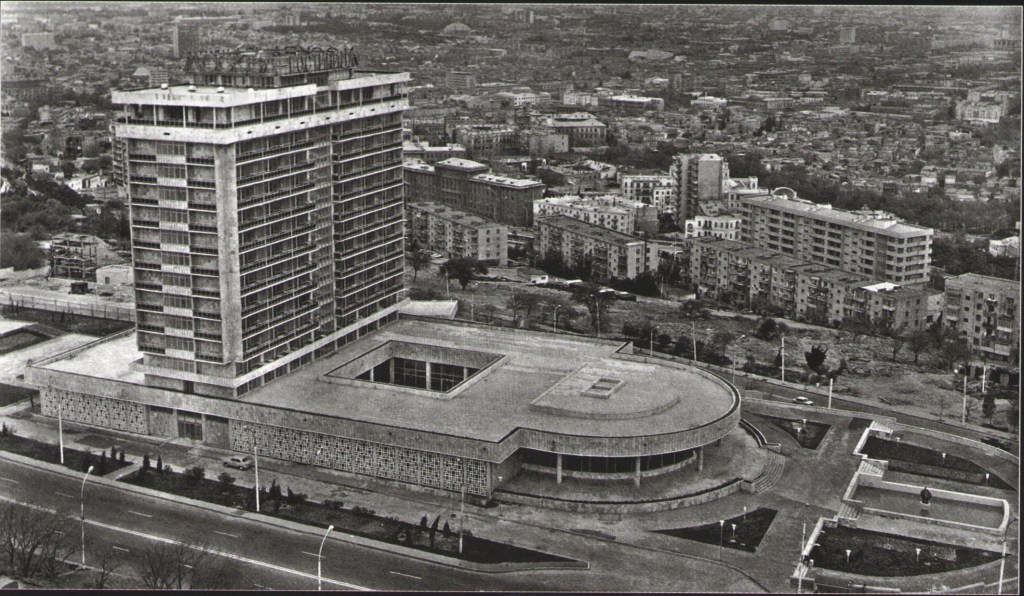
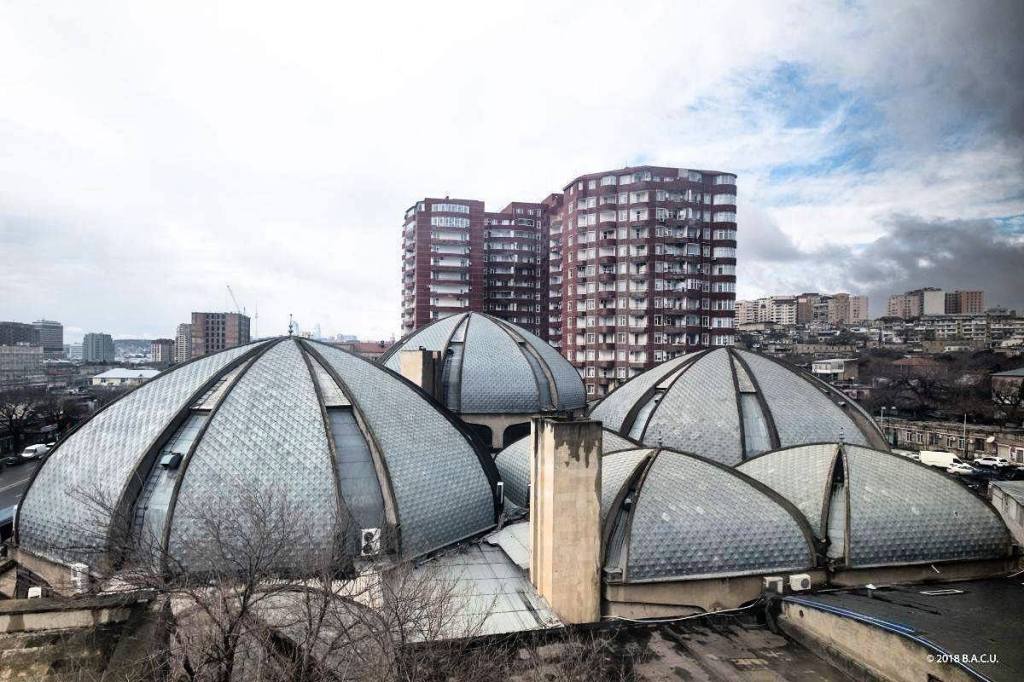
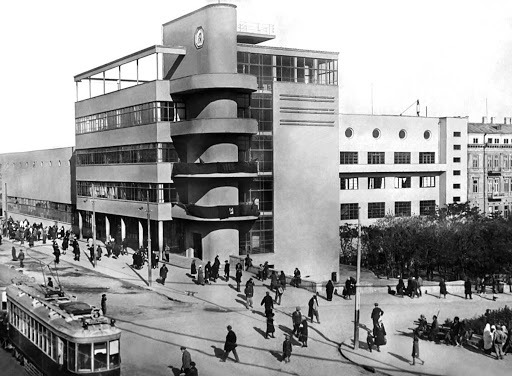
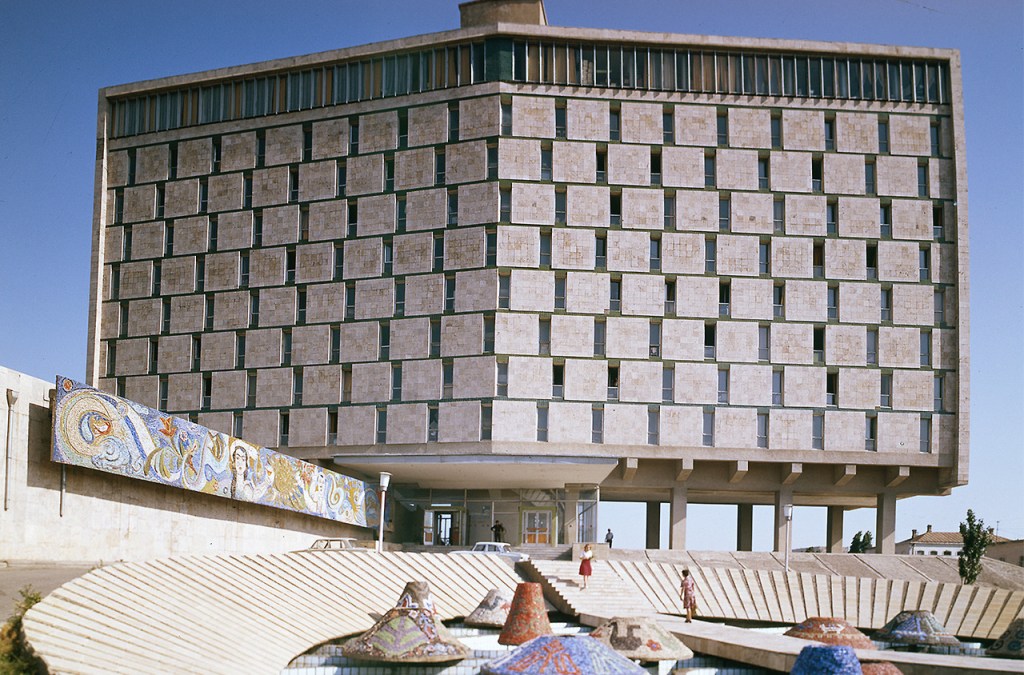
During the Soviet Union, architecture was subject to the changing tastes of Soviet leaders. Every leader would enact an evolving policy about how architecture should be. There was two movements of architecture, Constructivism and Empire Style, before and during Stalin’s era. The Khrushchev era saw the rise of architecture coined as Soviet Modernism. This style lasted until the fall of the Soviet Union.
Constructivism was a popular and flourishing modern architecture movement in the 1920s and the early 1930s in the Soviet Union. It combined technological innovation with a Russian Futurist influence, resulting in stylistically abstract geometric masses. It aimed at serving to meet the needs of changes in society of the time. One of the pioneering architects was the Vesnin brothers. Interestingly enough their first materialized constructivist project was built as workers’ town in Baku in 1925. Many other Azerbaijani architects, too, embraced constructivism in their early careers

In the mid-1930s, Constructivism fell out of favour and the Soviet leadership backed a policy of return to national traditions and roots. The architecture of this era is more known as the Stalinist Empire Style. In Azerbaijan, it produced a new wave called National Romanticism. This architecture advocated the adoption of decorations, ornaments and tall and larger arch-ways that rooted in Oriental and Azerbaijani culture. Leading architects of this movement in Azerbaijan were Mikayil Useynov and Sadig Dadashov.
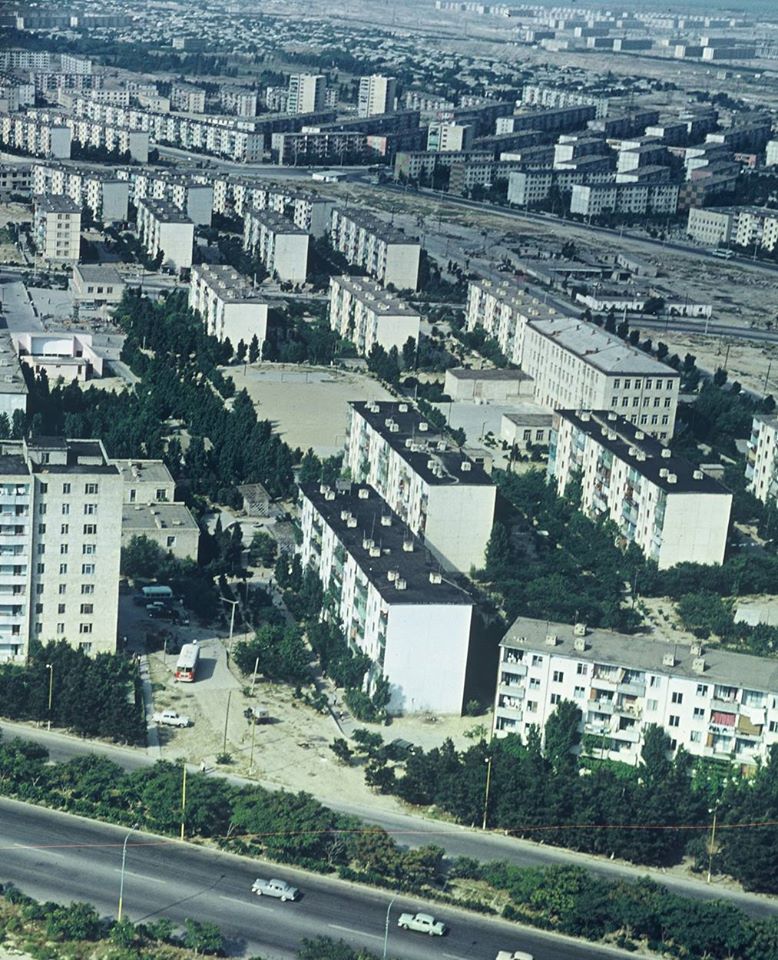
The era of 1955-1991 radically changed the approaches to architecture and in particular urban planning. Rooted in constructivism, Soviet Modernist architecture was primarily oriented toward utilitarian purposes whereas decorations and ornaments on buildings were rejected. Advanced methods and modern technologies are required to boost industrialization and cost reduction. This is when massive, grey, tall, austere matchboxes appeared in the built environment of Baku. The [in]famous projects of this era are Baku’s microraion residential complexes.
Neighbourhoods to Explore
Exploring Soviet-era architecture is searching for hidden gems in Baku. Baku Downtown area has few must-see Soviet-era architectures scattered around. However, the hidden gems are neighborhoods located quite outside of Baku Downtown.
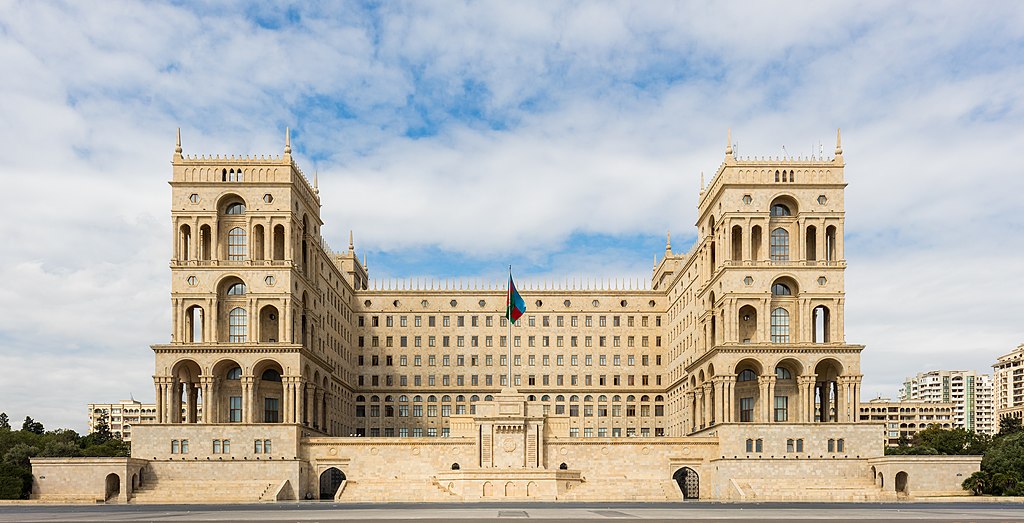
For Stalinist Era Architecture, the neighbourhood of Elmler Akademiyasi is the real treat. It is a quarter with a high level of student activity. It includes several universities, including Baku State University, which is the largest in Azerbaijan. The area also hosts the Campus of the Academy of Sciences (Elmer Akademiyasi) and provides all necessary infrastructure to support student and urban life.
The main purpose of the Microraions was to solve housing problems in Baku. It created new settlement complexes to house Baku’s working classes. There are nine Microraions and all of them are primarily oriented to meet the needs of residents. While exploring the neighbourhoods of the Microraions, one would naturally find an authentic suburban lifestyle. The recent construction boom has altered the environment greatly in the Microraions. The 8th Microraion somehow remains intact off the outside influences, which makes it a near-perfect showcase.
JOIN US ON
Baku Soviet Architecture Guided Walking Tour
Landmark Architectures
The Soviet Government House is a landmark architecture in Baku Downtown. Other notable buildings include the Office of Standard Bank, Monolith, and Buzovnaneft. The Republic Palace and President’s Administration are also significant. Additionally, the State Drama Theatre and Central Train Station are important structures. Outside Baku Downtown, visit Elmler Akademiyasi in Huseyn Javid avenue and residential apartments in Narmian Narimanov avenue. Above all, Microraions are places not just a showcase of urban planning and architecture but also a typical Soviet lifestyle.
Contemporary Architecture in Baku: XXI Century
Socio-Political Environment
In 1991 Azerbaijan regained independence from the Soviet Union. But the sweet independence came with costs. The collapse of the Soviet broke all existing system economic activity and it had a devastating impact on Azerbaijan, too. Besides, Azerbaijan got involved in a bloody conflict with Armenia. This conflict resulted in Armenia occupying 20% of Azerbaijan’s territory. Azerbaijan also faced the financial burden of dealing with 1 million refugees and IDPs.
In the meantime, Azerbaijan managed to attract western multinational oil corporations to invest and extract oil from the Caspian Sea. No matter how long it took, but eventually, the Azerbaijani government succeeded in the export of oil only in 2005. This was the inception of the Second Oil Boom. Subsequently, the Second Oil Boom made Baku the center of international attention. It hosted Eurovision Song Contest 2012, annual Formula 1 Races, and the European Games 2015.
A huge part of the oil money has been allocated to mega construction projects. This is done in the name of modernization and developing. This process is undergoing to add another layer of architectural history, futurism.
Development and Specifics of the Architecture
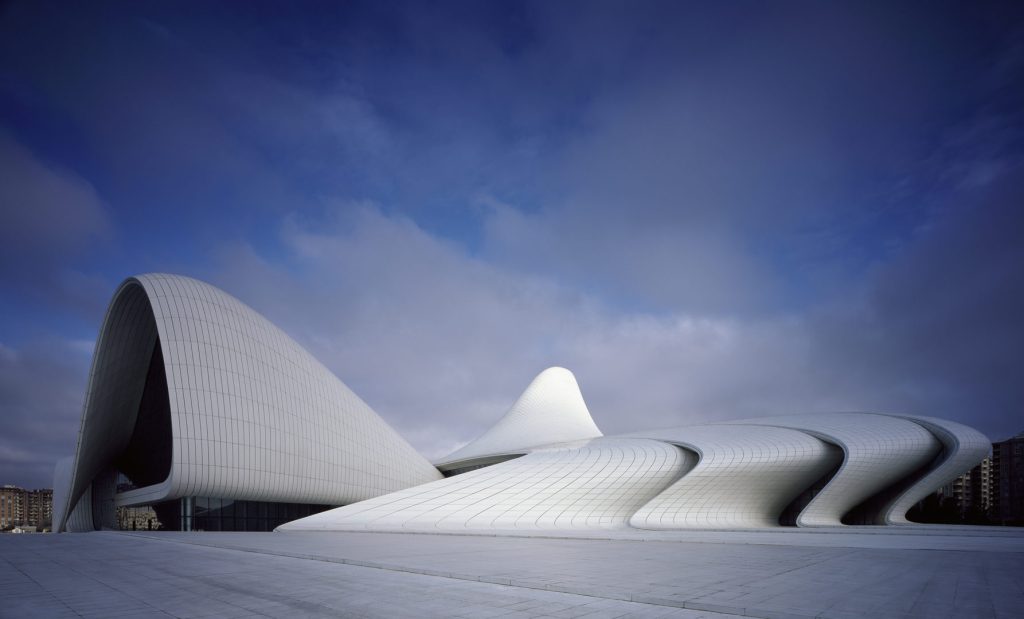
Architecture in Contemporary Baku is an ongoing process. This is the case when our generation lives through as the built environment is being made.
Generally, architectural development in Contemporary compared to Dubai or Kuwait by many in terms of glassy, shiny futuristic skyscrapers. It is true that similarly, the oil money fuels Baku’s ambitious mega projects. They even look similar, but their essence is completely different and there lies a rich cultural history.
Above all, this kind of architecture is nothing new to Baku. It happened once during the first oil boom era. Baku is not replicating and experiencing of some other places but reinventing itself on its own way. In a report to ArchDaily, Zaha Hadid Architects put it clear and straight that “Our intention was to relate to that historical understanding of architecture, not through the use of mimicry or a limiting adherence to the iconography of the past, but rather by developing a firmly contemporary interpretation, reflecting a more nuanced understanding.”
Overall the direction of the built environment in contemporary Baku is postmodern architecture with neo-futuristic tendencies.
Neighbourhoods to Explore
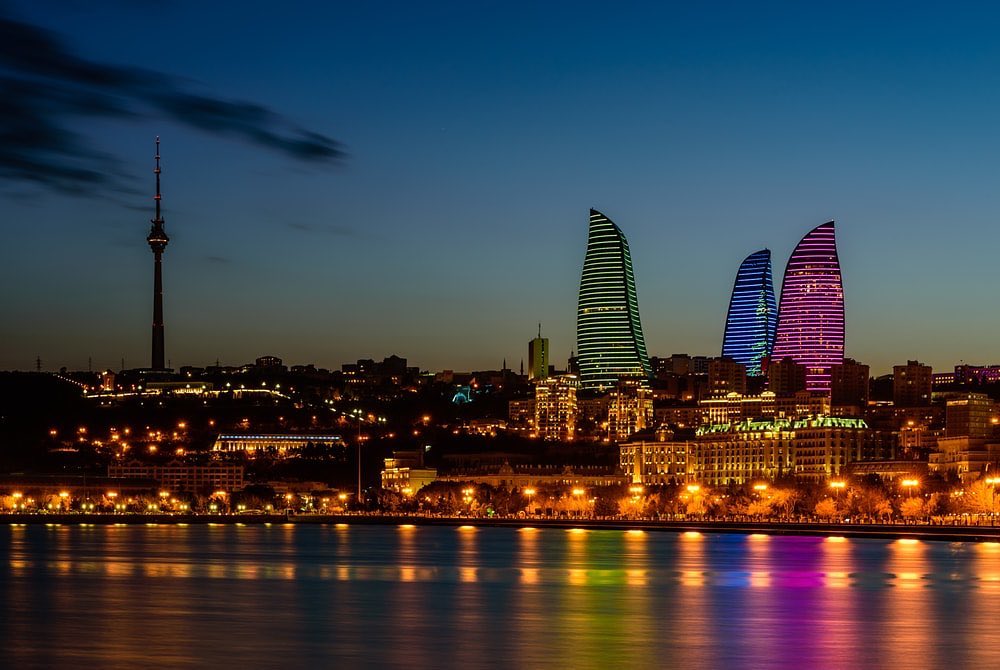
Postmodern architecture is important for many reasons. One reason is its impact on the understanding of neighbourhoods. These effects are seen where this kind of architecture is found. The sheer size of these massive construction projects is overwhelming. It’s nearly unsatisfying to approach them closely. It’s better to stay at a distance to truly appreciate their beauty. There one does not need to search for the exact location but you just need to find a viewpoint. You can find the viewpoints of those postmodern architectures on a walk across Baku Boulevard. This boulevard is the 15 km long promenade along the Caspian Sea.
Landmark Architectures
Flame Towers, Heydar Aliyev Center, and the Caspian Waterfront Shopping Mall are landmark architectures of this era. Port Baku Residence and the Crescent are also notable landmarks. See map of postmodern landmarks and viewpoints below.
Related Sightseeing Tours in Baku:
- Baku Old Town Private Walking Tour
- Baku Oil History Guided Walking Tour
- Baku Soviet Architecture Guided Walking Tour
- Baku Street Food and Local Eateries Tour
Written by: Local Guides in Baku
www.azerbaijantraveller.com
 Azerbaijan Traveller
One reply on “A Guide to Baku’s Iconic Architectural Landmarks”
[…] Alternatively, you arrange a self-guided architecture tour of Baku. […]